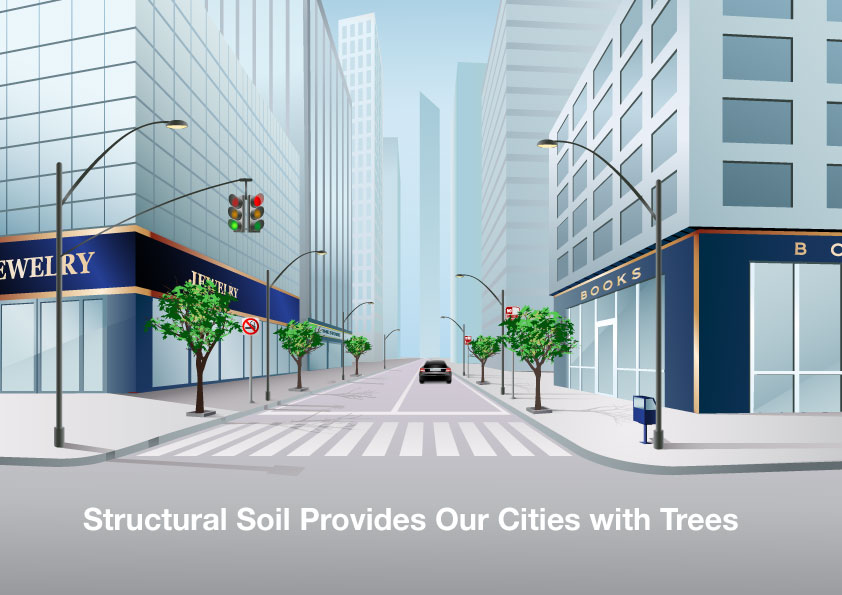
What is Structural Soil and Why is it Good for Trees
What is Structural Soil Why is it good for Trees?
Why is structural soil effective?
Structural soil is a type of soil mixed with a specific type of gap-upgraded rock (typically 75mm clear). This is a very important part of the specification; the reason structural soil works well is that the gaps created by the rock are then filled with soil, enabling penetration by tree roots. This penetration allows the tree access to a larger space underground, and has the double function of preventing the tree roots from lifting up the hard surface, i.e. the sidewalk that is on top.
How does the structural soil get tested?
The testing of structural soil is essentially a three-part process. The soil must be tested separately. The rock must be tested and sourced with a specific sieve size attached to it to determine that it is in fact a clear rock and not a minus rock. With a minus rock all of which would be filled and therefore the soil would be effective.
There is also a stabilizing compound that is used with structural support to help the soil adhere to the rock. The specifications for this material would come directly from the stabilizer supplier; there are more than one of these.
Who can make structural soil?
Like any engineered soil, structured soil is a technical process which is best done by people who understand all the specific components and have all the components readily available with testing and prior knowledge. Making good structural soil to specification is an extremely important endeavour. Structural swell that is not up to specification is a very difficult situation to remediate once it’s already in the ground.
If you enjoyed this edition of “Ask Tom” please share with your friends!