Is Coloured Mulch Safe for Your Garden

Is Coloured Mulch Safe for Your Garden?

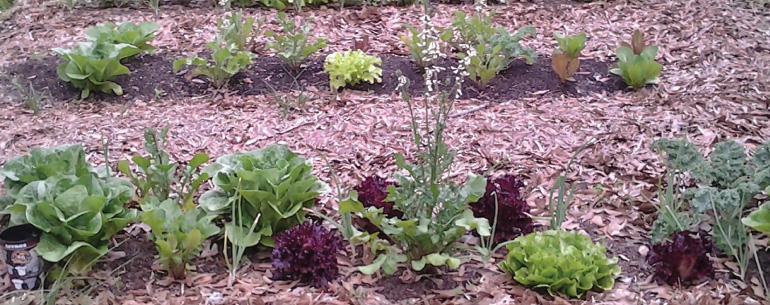
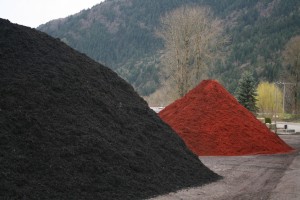
The use of coloured mulch has increased over the last number of years, as the bold and rich colour offers an attractive look for landscaping while continuing to offer the benefits of mulching. Unlike natural, non-dyed mulch, which tends to fade to gray, coloured mulch can hold its colour for a year or longer.

However, with these benefits, public concern has also been raised regarding the use of coloured mulch. The primary question is:  Is Coloured Mulch Safe for Your Garden?
is coloured mulch safe for your garden 1

What about the dye?

The typical dyes used for colouring mulch are iron oxide-based and carbon-based. Iron oxide, used to produce red mulch, is commonly known as rust, and is used extensively in paints, cosmetics, and even used to dye flowers.  Carbon, used to produce black mulch, is an element often used for ink or paint. Both bases for these dyes are considered natural, non-toxic and safe for handling. Most other colours are made with vegetable-based colourants, also from naturally occurring elements.

A study (“Are Mulch Colorants Safe”) conducted by the Mulch and Soil Council, determined that colourants typically used for coloured mulch are deemed non-toxic and when used properly, would not have any negative effects on the environment.

Of course, a savvy customer should ask about the product they are purchasing, and the company should know about their product. For example, at Denbow, we know that our mulch is coloured with non-hazardous, safe for the environment, ingredients.
is coloured mulch safe for your garden 2

What is in the wood?

As the colourant used in coloured mulch has been generally deemed safe for use, eyes have turned to the content of the wood. The use of recycled wood is a beneficial practice for the environment, yet depending on the content of the wood, harmful toxins (such as lead) could be lingering from past uses.

When purchasing coloured mulch, then, it is important to consider the wood content. In an effort to improve the quality of our products, Denbow produces a number of our own materials, including processing our own mulches. We work with select sources of material to minimize foreign material in our finished products. Our red and black coloured mulches are made of locally recycled wood, free from these contaminants.   
Coloured-Mulch-Safe-for-Your-Garden-3

Will it affect the soil?

There is a concern that when using wood mulch, the carbon of the wood will interact with the nitrogen in the soil, using the nitrogen to help the decomposition process, but in turn, pulling the nutrients from the soil. Coloured mulch actually decomposes at a slower rate than regular wood mulch, which means the nitrogen is removed from the soil at a slower rate.

Use of a nitrogen-rich fertilizer is encouraged, as for whether or not mulch is used, the soil can benefit from the implementation of a regular fertilization program. It is recommended when adding new mulch, to take the time to remove old mulch or be sure to cultivate your existing mulch on a monthly basis in order to help healthy decomposition.

At the end of the day, if you are looking for a pop of colour to refresh a garden bed, or seeking to landscape a new area and considering an alternative to the natural mulch, coloured mulch is a safe and beautiful option. Is coloured mulch safe for your garden? Yes, Denbow’s coloured mulch definitely is.
Rock Blowing 101: Aggregate Installation, the Smart Way

20 Reasons Why You Should Use Mulch In Your Garden

20 Reasons Why You Should Use Mulch In Your Garden

Are you interested in saving time and money while giving your garden the best chance to succeed? Are you losing too many plants in the heat of summer or the frost of fall? Here’s our “simple” solution that should help you out. Use Mulch!! It’s nature’s best way to protect plants, add nutrients and save on water.

Here’s are 20 reasons why you should use mulch, bark mulch or coloured mulch in your garden.


1. Adds organic matter to your soil, which helps make your garden healthier and more resistant to pest and plant disease.

2. Provides valuable slow-release nutrients and prevents vitamin loss in plants which saves you money on fertilizer and ammenders.

3. Helps retain moisture in the soil. Mulch acts as a natural roof and insulation layer to protect the soil from the sun. This helps prevent excessive evaporation of water and helps regulate the soils temperature.  This helps utilize the minimal amount of rain water we get in the summer and helps save with the amount of water we use.

Mulch-20-list-2

4. Shades delicate seedlings from too much sun since it acts a natural roof and shade.

5. Reduces time spent watering. More time to tend to other tasks and (this is getting redunant) helps save water!


“Mulch can retain up to 70% more water in the soil than unmulched soil.”

Abbotsford-Quote

6. Is a great insulator by regulating soil temperature – keeps roots consistently cool in summer and warm in winter which reduces the amount of plant stress and typically provides for a richer, stronger plant.

7. Provides a natural barrier to help prevent weeds. The interlocking layer of mulch prevents the air born weeds from getting rooted in your gardens soil. If weeds do get a start, mulch makes pulling weeds easy.

8. Increases biological activity in your soil by providing beneficial micro-organisms and earthworms with food. Both of which are great for your plants!

9. Improves soil conditions – helps to bind sandy soils and open up clay soils.

10. Saves you time and energy in prepping and cultivating your soil.

11. Stops nutrients from leaching out of the soil.

12. Protects plants from frost damage by acting as a protective covering. We’ve mentioned this before but we felt the insulating factor of mulch is too important to not mention again.

Mulch-20-list-1

13. Provides a clean surface for produce like fruit and nuts to fall, ready for harvesting.

14. Improves soil drainage and structure as it decomposes.

15. Provides support around plants especially young seedlings. You can “pile up” a little mulch around weaker steams giving the young plant the extra help it needs to thrive.

16. Recycles waste materials. This is one of the main principles that we operate from. We LOVE to recycle forest residuals into useful products.

17. Protects plants from heavy rain. The protective interlocking nature of mulch protects and helps bind together the plant structure.

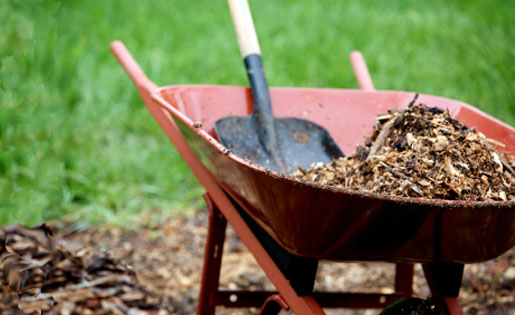
wheel barrow full of mulch

18. Prevents erosion and soil compaction particularly from foot traffic on pathways and play areas.

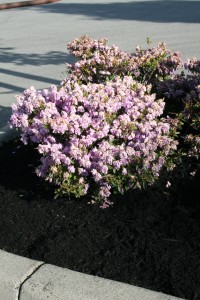
19. Improves the visual appearance of your garden. Especially if you use a beautiful coloured mulch.

20. Can provide a home for plant-friendly insects.

We love to hear from you so please either share this with your friends or you can email us any questions you might have. We hope you enjoyed our 20 Reasons for Mulch.

Thanks to the Micro Gardener for the some of the ideas we used for this article.

Save

Playground Wood Chips the Better Alternative to Rubber Mulch

Fresh mulch for spring landscaping

Spring is definitely in the air here in the beautiful Fraser Valley!  At Denbow, that means we are busy building our stock by processing fresh piles of mulch.

IMG_2675

What are the benefits of mulching landscape beds?  Most of us hate pulling weeds – and mulching at 2-3″ depth every other year will help keep those pesky weeds under control.  But did you know that mulching also helps retain moisture for your plants as well as maintain a better temperature for your plants?  By mulching in the spring, you’re preparing for hot summer weather.  The mulch will keep the soil cooler during extremely hot weather.  Mulch also protects the soil from eroding and depleting.  And of course, your landscape looks tidy, vibrant and beautiful!

Available in Black or Red, coloured mulch is the best choice for weed control and longer lasting colour.  Made in-house for best quality, ask for it delivered bulk, blown-in or stop by our yard with your pickup truck.

IMG_0072